Sign-ups
New subscribers hear nothing
Someone joins your list on Tuesday and gets the next newsletter three weeks later, by which time they have forgotten why they signed up.
Ads and visibility: customers who are looking for your service now or don’t know about it yet.
01 Google AdsEnquiries from people searching for your service right nowfrom £480/mo 02 Social media adsMeta, TikTok, LinkedIn: customers who are not searching yetfrom £480/mo 03 SEOHigher in Google and Maps without paying per clickfrom £430/mo 04 Visibility in ChatGPT and AIYour business in AI assistant answerspart of SEO 05 Amazon, eBay and marketplacesSell where customers already buywith a partnerThe place where a visit turns into an enquiry, and a system that doesn’t lose that enquiry.
01 Web designA website that turns visits into enquirieslanding from £400 02 Online shopsCart, payments and shipping, ready for adsfrom £1,300 03 CRMNo enquiry gets lost in a phonesetup £620 04 Chatbots and AIThey answer customers, at night too£310 05 Email and SMSCustomers come back instead of forgetting youquoted individuallyPlan and tracking first, budget second. You know what works before you spend more.
01 Strategy and auditKnow where to spend the budget before you spend it£500 02 AnalyticsSee which ad brings in money£240 03 ConsultationsA call about your specific problem£25/h 04 Free auditA quick review and 3–5 priorities to start£0How your business looks and sounds before anyone calls you.
01 Social media managementProfiles that look like a real businesswith a partner 02 Creative and videoGraphics and videos that stop the thumbquoted individually 03 BrandingA logo and style that set you apartwith a partnerEmail automation sends the right message when a customer does something: signs up, leaves a basket, asks for a quote, goes quiet for three months. I map the flows, write them, connect them to your shop, website or CRM and test every branch, so follow-up happens while you are busy doing the actual work.
Free: a 30-minute call, an action plan and a price range in writing.
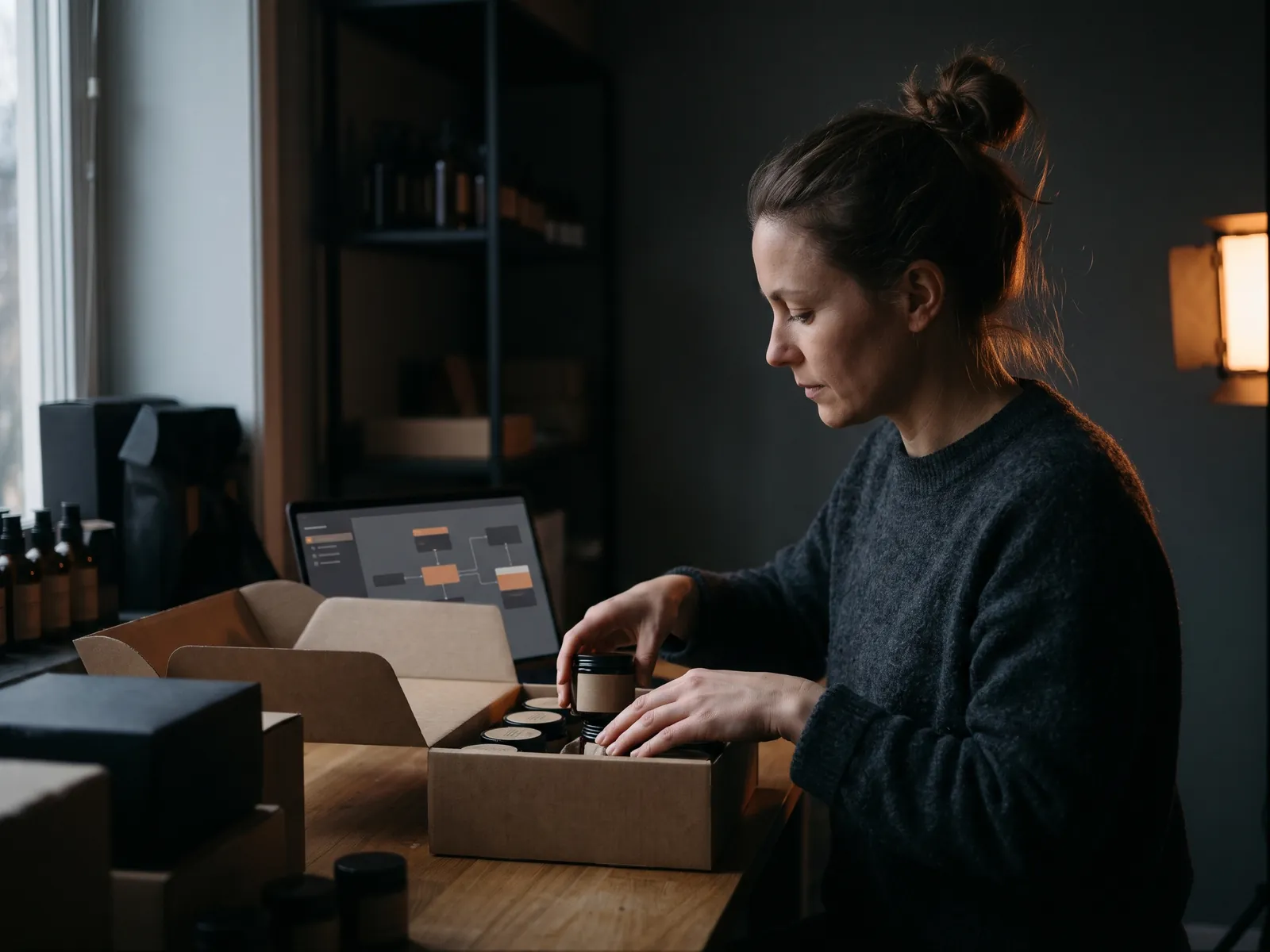
Most lost sales are not lost to a competitor. They are lost to silence after the first contact.
Someone joins your list on Tuesday and gets the next newsletter three weeks later, by which time they have forgotten why they signed up.
A kitchen, a bathroom, a course: the quote goes out, nobody follows up, and the customer quietly books whoever rang them back.
Nobody notices that a client who came every six weeks has not been in since summer, until the slot has been empty for months.
After signing up, customers get the next messages at the right moment, and you see what they opened and clicked.
Two well-built flows beat ten half-finished ones. We add more once the first ones are working.
From first contact to repeat purchase. We pick the two or three moments where a timely email would make the biggest difference.
Your shop, booking system, website forms or CRM feed events to the email platform, so flows start on real actions, not guesses.
Each email in the sequence written for its moment, with clear exit rules so nobody gets a 'still interested?' after they have bought.
Test contacts run through every branch on a phone and a laptop. Then the flows go live and I check them again after two weeks.
The price depends on how many flows you need and what they connect to, so I quote after a short call. Prices are in pounds sterling. The platform subscription is yours and paid directly.
Flows mapped, written, connected and tested.
CRM setup plus a chatbot, the base most follow-up flows are built on.
Delivery orders on the restaurant's own website with a CRM behind them, so every order leaves a customer record for later messages.
See the case study →A website in four languages with calculators and a CRM that collects every enquiry in one place.
See the case study →Email automation is a set of rules: when this happens, send that, then wait, then check, then send the next thing or stop. The point is timing. A message that lands ten minutes after someone leaves a basket or asks for a quote is read in a completely different mood from one that lands a fortnight later.
For a small UK business, automation mostly replaces jobs that someone meant to do and did not: thanking a new customer, chasing a quote, reminding a regular that it is time to book. Done once and done properly, those flows keep running through busy weeks, holidays and the run-up to Christmas.
| Flow | Starts when | Typical length |
|---|---|---|
| Welcome series | Someone joins the list | 3 to 4 emails over 2 weeks |
| Abandoned basket | A shopper leaves without paying | 2 to 3 emails over 3 days |
| Quote follow-up | A quote is sent or a form is filled in | 3 emails over 2 to 3 weeks |
| Post-purchase | An order is delivered or a job finished | Thank-you, care tips, review request |
| Rebooking reminder | The usual interval has passed | 1 to 2 emails, plus an optional text |
| Win-back | No purchase for 90 to 180 days | 2 to 3 emails, then a quiet pause |
Shops usually begin with the first two. Service businesses such as salons, clinics, garages and kitchen fitters tend to get more from quote follow-up and rebooking reminders. My article on lead follow-up sequences shows a worked example for a service business.
The most embarrassing automation mistake is the email that ignores what the customer just did: a 'did you forget something?' after they have paid, or a third chaser after they have already booked by phone. Every flow I build has exit rules. A purchase, a booking, a reply or a change of status in the CRM stops the sequence.
That is also why automation works best when the email platform can see your sales data. With a shop it usually can. With a service business, the data lives in a booking system or a CRM for small business, and I connect the two so a deal marked 'won' stops the chasers instantly.
Automated messages follow the same PECR rules as any other marketing. Transactional emails such as order confirmations and delivery updates do not need marketing consent, but once you add a promotion, the email becomes marketing. In practice:
If you are unsure about a specific flow, the ICO publishes guidance on direct marketing, and my article on PECR email rules covers the common cases.
Klaviyo is strong for Shopify shops because it sees products, orders and browsing. Brevo and Mailchimp handle most service-business flows well at a lower monthly cost. If you already use HubSpot or Zoho as a CRM, their own email tools may be enough. I compare them in more detail on my email platforms page.
Automation is one strand of my email marketing services. It pairs naturally with a monthly newsletter: the flows handle the moments, the newsletter keeps you familiar in between. If you are not sure which flows your business needs, a short call usually settles it: I ask how customers find you, what happens after the first contact and where people tend to drop off, and the answer points to one or two flows worth building first.
For an online shop, the welcome series and the abandoned basket flow, because they reach people at peak interest. For a service business, a quote follow-up and a rebooking reminder. The first call is mostly about finding which moment in your customer journey loses the most money today.
It depends on the basis. If the shopper is an existing customer, or gave their email during the checkout and was offered an opt-out, the soft opt-in usually covers it. If they never gave consent and are not a customer, a marketing reminder is risky. I set the checkout wording so the basis is clear. For edge cases, check the ICO's guidance.
Only if they are written that way. I write them as short, personal notes from you, sent from a real address that accepts replies. Many customers reply to a well-written follow-up, which is exactly what you want: a conversation with a person rather than a click on a button.
Shopify, WooCommerce and most shop platforms, website forms on sites I build, booking tools with an integration or API, and CRMs such as HubSpot, Pipedrive and Zoho. If your system has no integration at all, I will tell you on the first call rather than promise something fragile.
Most platforms report revenue or bookings per flow. I set up tracking so you can see which flow produced which orders and enquiries, and I add a short summary to the monthly report. If a flow does not earn its place after a fair test, we change or switch it off.
Tell me what you sell and what happens after someone first gets in touch. I reply within one working day with the two flows I would build first, or book a free 30-minute call.