How to get more Google reviews without breaking the rules
How UK businesses can get more Google reviews legally: when and how to ask, ready-to-use wording, replying to reviews and what the DMCC Act and Google forbid.
The way to get more Google reviews is simple and slightly boring: ask every customer, at the moment they are happiest, with a direct link, and make it take less than a minute. Businesses with lots of reviews are rarely lucky. They have a habit, usually a text message or an email that goes out after every job, and someone who replies to what comes in.
What you must not do has also become much clearer in the UK. Since April 2025, the Digital Markets, Competition and Consumers Act bans fake reviews and hiding incentivised ones, and the Competition and Markets Authority can now fine businesses directly instead of going through the courts. Google's own policy is stricter still. So the guide below sticks to methods that are allowed and that work.
Why reviews matter more than most owners think
Reviews do two jobs at once. They are one of the signals Google uses to decide who appears in the Maps results, and they are what a customer reads in the ten seconds before choosing whom to call. A plumber with 80 recent reviews mentioning "boiler" and "same day" is more likely to show up for those searches and more likely to get the call.
Recency matters as much as the total. A profile whose newest review is from two years ago looks like a business that might have closed. A steady trickle of fresh reviews tells both Google and customers that you are active.
When to ask
Timing is most of the battle. Ask when the customer has just experienced the result:
- Trades: when the job is finished and they have seen it working: the boiler fires up, the leak has stopped, the kitchen is fitted.
- Salons and clinics: at the end of the appointment, or with a message that evening.
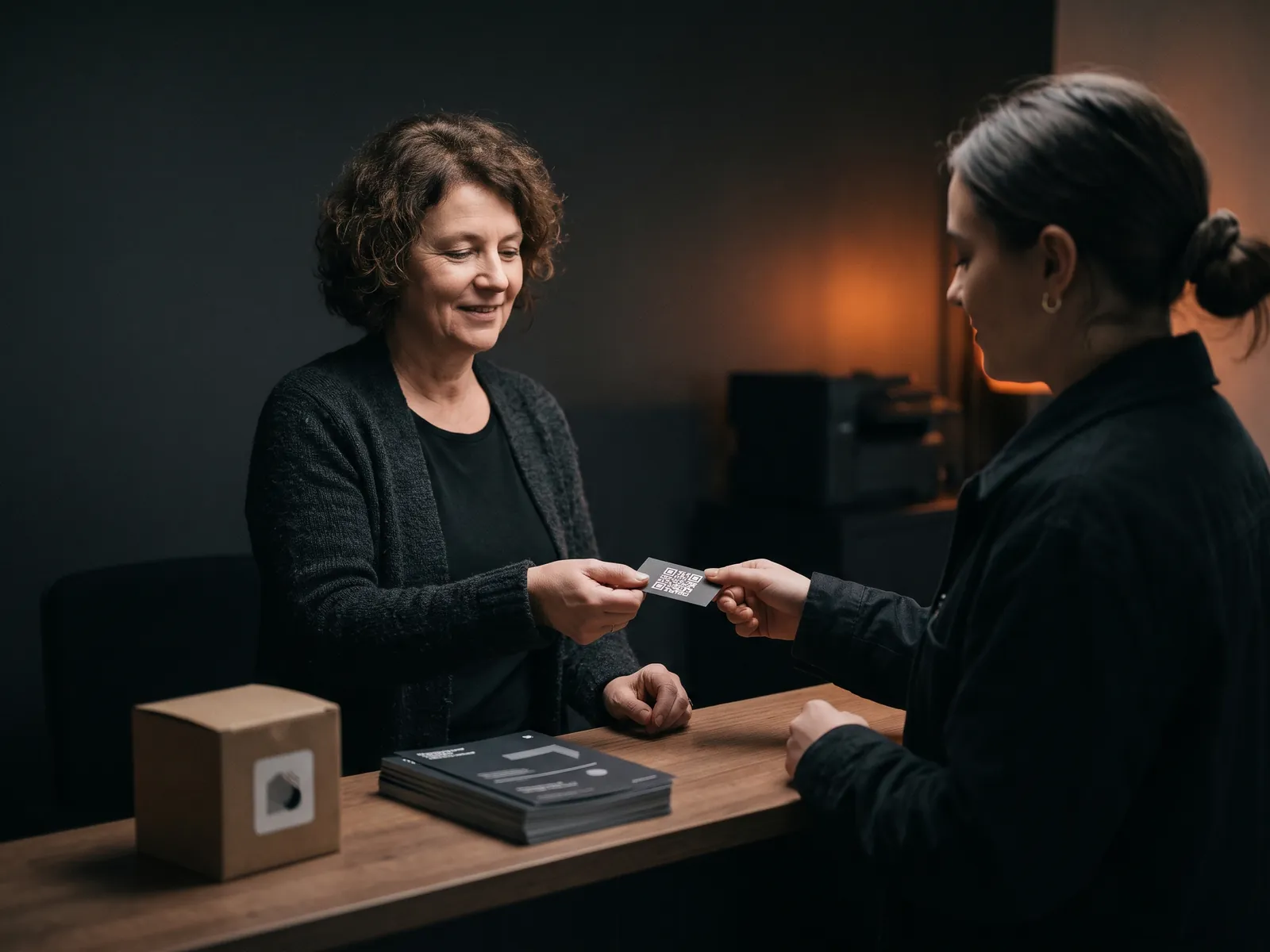
- Restaurants and cafés: a small card with a QR code on the table or with the bill, not a hard sell.
- Professional services: when the matter is completed: the house purchase has gone through, the tax return is filed.
Asking a week later works less well. Asking before the work is done is pointless.
How to ask: five message templates
Copy your review link from your Google Business Profile (look for "Ask for reviews"), shorten it if you like, and use wording that sounds like you. A few examples:
- Text after a job: "Hi Sarah, thanks for having us today. If you've got a minute, a short Google review really helps a small business like ours: [link]. Cheers, Dan."
- Email after an appointment: "Thank you for coming in today. If you were happy with your treatment, would you mind leaving a quick review on Google? It takes under a minute: [link]."
- WhatsApp for a regular customer: "Thanks again for this week. Would you be up for leaving us a Google review? Here's the link: [link]."
- In person, then a follow-up: "We rely a lot on Google reviews. Could I text you the link?" Then send it straight away.
- On the invoice or receipt: a single line with a QR code: "Happy with the work? Tell others on Google."
Keep it short, personal and free of pressure. Never tell people what to write or what rating to give.
What is not allowed
| Practice | Google policy | UK law (DMCC Act) |
|---|---|---|
| Buying reviews or paying someone to write them | Prohibited | Banned |
| Writing reviews yourself or asking staff and family to | Prohibited | Banned as fake reviews |
| Offering money off, a gift or a prize draw for a review | Prohibited | Must be disclosed at the very least; risky |
| Only asking customers you expect to be happy (review gating) | Prohibited | Can mislead consumers |
| Hiding or suppressing negative reviews on your own site | n/a | Can be a misleading practice |
| Swapping reviews with other businesses | Prohibited | Fake reviews |
The simplest rule: ask everyone, give nothing in return, and let customers say what they think. There is a fuller explanation of the law in fake reviews and the DMCC Act. If you are unsure about a specific scheme, check with a solicitor before you run it.
"Review gating" deserves a word because it is common in software. Some tools ask "Were you happy?" first, then send happy customers to Google and unhappy ones to a private form. Google does not allow this, and it creates a misleading picture. Ask everyone the same way, and deal with complaints directly.
Replying to reviews
Reply to every review, briefly. For positive ones, thank the person by name and mention something specific, such as the job or the treatment, without inventing details. For negative ones:
- Wait until you are calm, then reply within a few days.
- Acknowledge the problem, give your side in one or two sentences without blaming the customer, and offer to talk directly.
- Never share personal details. Clinics, solicitors and accountants in particular must not confirm that the reviewer is a client or mention anything about their case.
A good reply to a bad review often does more for future customers than five more five-star ratings. People are reading how you behave when something goes wrong.
Removing reviews that break the rules
You cannot remove a review because it is negative. You can report reviews that break Google's policy: spam, reviews from people who were never customers, abusive language, conflicts of interest such as a competitor reviewing you. Use "Report review" on the profile, then the review management tool if nothing happens. Expect to wait, and keep evidence.
Making it a system, not a good intention
Most businesses start asking enthusiastically and stop within a month. A few ways to make it stick:
- Send the request automatically from your booking system or CRM when a job is marked complete. I set this up as part of CRM implementations, with a single reminder a few days later.
- Put the QR code where staff can point to it without thinking.
- Look at new reviews in a weekly meeting, even if that meeting is you and a cup of tea on Monday morning.
What about Trustpilot, Feefo and Checkatrade?
Google reviews matter most for local search, but many UK customers also check Trustpilot, Feefo or trade platforms such as Checkatrade before booking. Focus on Google first, then one platform that your customers actually use. Spreading requests across five sites means none of them looks busy. The UK business directories guide covers which platforms still matter by sector.
Reviews are one part of local visibility. If you want help with the rest, my local SEO and Google Maps service starts from £430/month.
Let’s talk
about your business
Before the call I review your website and ads. After the call you get an action plan and a price range in writing.

12+ years in online marketing, 100+ clients. I build websites, Google Ads and Meta ads campaigns, CRMs and automations for small and mid-sized businesses. About me →
Questions owners ask
Can I offer money off in exchange for a Google review?
No. Google's policy prohibits incentives for reviews, whatever the rating. Under UK law, incentivised reviews have to be clearly disclosed at the very least, and concealing them is banned. The safe and effective approach is to ask every customer politely and give nothing in return.
Is it legal to ask only happy customers for reviews?
Choosing whom to ask based on whether they will be positive is called review gating. Google forbids it, and it can give consumers a misleading picture, which UK consumer law takes seriously. Send the same request to every customer and deal with complaints directly.
How many Google reviews should a small business aim for?
There is no magic number. Compare yourself with the businesses that appear in the Maps results for your main service and aim to match their range over time, with more recent reviews. A steady flow of two or three new reviews a month often beats a burst followed by silence.
Can I get a bad Google review removed?
Only if it breaks Google's rules: spam, fake accounts, someone who was never a customer, abuse, or a conflict of interest. A genuine negative review stays. Reply calmly, explain what you did or will do, and offer to talk. Future customers notice fair replies.
Set up review requests that go out by themselves
I can connect your booking system or CRM so every finished job triggers a polite review request. Tell me what you use now and I'll suggest the simplest setup.