How much does CRM implementation cost?
What CRM implementation costs a UK small business: one-off setup, subscriptions, data migration, integrations and your own team's time, with real prices.
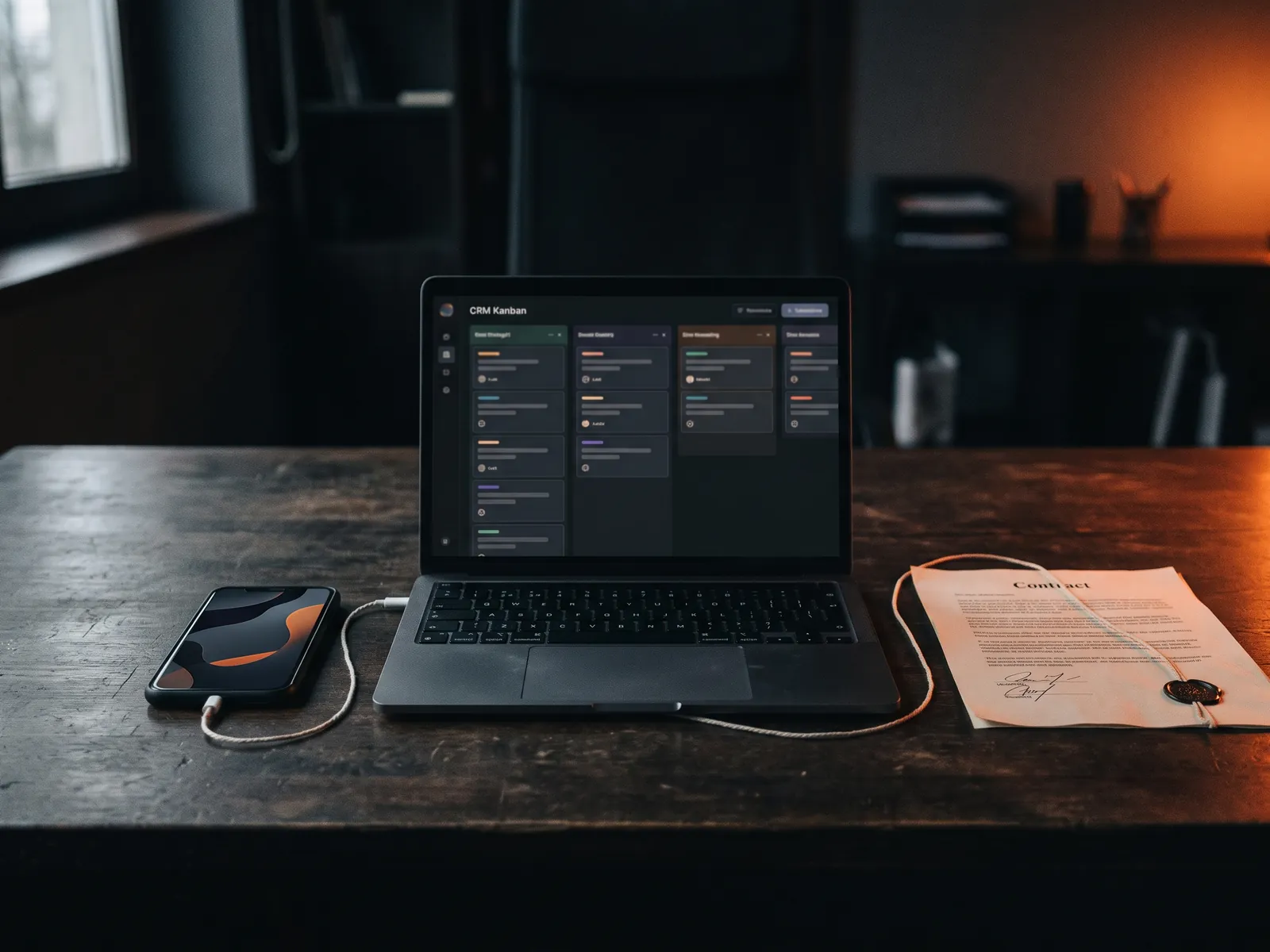
CRM implementation cost for a small business in the UK breaks down into two parts: a one-off setup fee for the work of fitting the system to your business, and running costs, usually a monthly subscription per user if you choose a ready-made platform. With me, setting up HubSpot, Pipedrive or Zoho costs £620, and a custom CRM built for your process costs £780 with no per-user fee afterwards.
Those two numbers are the visible part. The real cost of a CRM also includes your team's time, cleaning old data, and any integrations you need later. This article walks through each item so you can budget honestly and compare quotes that look very different on paper.
The five parts of CRM implementation cost
1. Software. Ready-made platforms charge per user per month, and the price climbs with each tier. Free plans exist, but they usually limit automations, reporting or the number of pipelines. Check the provider's current UK price list, as plans change often and prices are often shown before VAT.
2. Configuration. Someone has to decide your stages, required fields, lost reasons, user permissions and views. This is the part most people underestimate, and it decides whether your team will actually use the thing.
3. Data migration. Old contacts sit in spreadsheets, phones, email inboxes and old booking systems. They need cleaning, de-duplicating and mapping into the right fields. A messy import is the fastest way to make a new CRM feel useless.
4. Integrations. Website forms, call logs, WhatsApp or Facebook messages, a booking system, an invoicing tool such as Xero or QuickBooks. Some connect with a click, others need custom work or a middleware tool with its own monthly fee.
5. Training and adoption. A short session for the team, written notes for the stages, and someone checking in the first few weeks that leads are moving. Skipping this is how CRMs die quietly.
Typical budget ranges, and why they differ so much
You will see CRM quotes in the UK ranging from a few hundred pounds to many thousands. The difference is mostly about scope, not about the software:
| Scope | What is included | Who it suits |
|---|---|---|
| DIY setup | Your own time, free or entry plan | Sole traders testing the idea |
| Standard setup | Pipeline, forms, import, training | Most small service businesses |
| Custom CRM | Built around your process, no seat fees | Small teams with non-standard steps |
| Large rollout | Multiple teams, complex permissions, data warehouse | Larger firms with in-house IT |
For a typical small business with up to ten users, the standard setup or a custom CRM covers what is needed. Large rollouts are a different category and usually involve a consultancy and several months.
Running costs over three years
Owners often compare the setup fee and forget the subscription. Here is a fair way to look at it: take the monthly cost per user for the plan you would really need (not the cheapest one), multiply by your number of users, then by 36 months. Add any paid add-ons, such as extra automations or a calling feature.
For some firms that total is perfectly reasonable, because the platform saves hours every week and the ecosystem is valuable. For others, especially those with several staff who only need to log a call or check a job, per-seat pricing makes a custom CRM cheaper over time. I compare both routes in custom CRM vs HubSpot or Pipedrive.
Hidden costs to ask about before you sign
- Seat creep. Adding a part-time admin or a new estimator often means another full licence.
- Tier jumps. One feature you need, such as automated sequences or custom reports, may sit only in a higher plan.
- Middleware. Tools that connect apps together have their own subscriptions.
- Phone and SMS. Calling and texting from inside a CRM usually costs extra per number and per message.
- Your own hours. Someone in your business needs to answer questions, approve stages and test. Plan for a few hours a week during the project.
- Exit cost. How hard is it to export everything if you leave? Ask before, not after.
What you get for £620 or £780 with me
Both options include the same core: a call to map your sales process, a pipeline with your stages, your website forms connected so enquiries arrive automatically, an import of existing contacts, basic reminders, and training for you and your team. The timeline is about 15 days, there are three rounds of revisions, and the accounts and data are registered in your name. Payment is staged, 30% at the start, 40% midway and 30% on handover, under a written agreement with deadlines.
The ready-made CRM setup suits teams who want a known platform. The custom CRM suits small teams with a process the templates do not cover, such as site surveys, multi-stage quotes or bookings with packages. If you also want a chatbot catching enquiries outside working hours, the Leads under control package combines CRM setup and a chatbot for £930. The full list is on the CRM pricing page.
A worked example of the decision
Picture a small heating engineer business in the Midlands with the owner, an office manager and two engineers. The owner wants every boiler enquiry, service reminder and quote in one place. With a ready-made platform, four seats on a plan that includes automations make a steady monthly bill that rises as the team grows. With a custom CRM, the setup is £780 and there is no per-user fee, but changes later need a developer.
Neither answer is automatically right. If the office manager loves a particular platform and the team will grow into a sales function, the subscription may be money well spent. If the engineers only need to see their jobs and tick them off, paying for full seats makes less sense. Working through that example with your own numbers is exactly what the free consultation is for.
How to keep CRM costs down without cutting corners
Decide your stages before the project starts. Clean up your spreadsheet of contacts yourself if you have the time, removing duplicates and dead records. Start with one pipeline, not five. Add automations once the basic flow works for a month. And make one person responsible on your side, so questions get answered the same day.
If you are still deciding which system to pick, my guide on how to choose a CRM for a small business covers the questions to answer first. Or send me a short brief and I will come back within one working day with a fixed price.

CRM implementation with me
Prices in pounds sterling. Subscriptions for ready-made platforms are paid by you directly to the provider.
HubSpot, Pipedrive or Zoho set up around your sales stages.
- Pipeline and fields
- Website forms connected
- Contact import
- Training for your team
A CRM built for your process, with no per-user subscription.
- Your stages and fields
- Forms and website integration
- Reminders and simple automations
- Handover and training
CRM setup plus a chatbot that feeds enquiries into it.
- CRM setup
- Chatbot (delivered with a partner)
- One inbox for every enquiry
Show me where
inquiries get lost today
30 minutes, free: we map your process from the first call to the invoice and see what’s missing. No obligation.

12+ years in online marketing, 100+ clients. I build websites, Google Ads and Meta ads campaigns, CRMs and automations for small and mid-sized businesses. About me →
CRM costs: common questions
Why is a CRM setup a one-off fee if the software is monthly?
The subscription pays for the software. The setup pays for the work of making it fit your business: stages, fields, forms, imports, automations and training. Without that work most small firms pay for a CRM for months and still keep enquiries in their heads.
Can I pay monthly instead?
Projects are paid in stages, 30/40/30, and ongoing help can be a monthly arrangement with no minimum term and one month's notice. Ready-made platform subscriptions are always billed by the provider directly to you, so the account stays in your name.
What if I already started setting up a CRM myself?
That is common, and some of the work can usually be kept. I look at what exists on a call, then tell you whether it is quicker to tidy it up or to restart cleanly. Either way you get a fixed price before anything begins.
Are there hidden costs later?
The usual later costs are extra seats on a ready-made platform, paid add-ons, and changes when your process changes. I list the expected subscription costs before we start so you can compare them with a custom option over three years.
Write
to me.
Describe your business in two sentences. I’ll reply within one working day and tell you honestly whether I can help.